Where to Order Affordable Custom Logo Hoodies in Bulk?
The location of the supply chain significantly affects the cost structure. Data shows that due to the cluster effect, contract manufacturers in the Pearl River Delta region can reduce transportation rates by up to 15%. For instance, when the MOQ (minimum order quantity) of Dongguan Textile Group is 150 pieces, the unit price is 8.5 (including tax), compared with 18.7 for European and American manufacturers. The 2024 Alibaba International Station report indicates that Vietnamese factories that have obtained WRAP certification (such as Saitex) can reduce labor costs to 23% of the total budget, and keep the fabric weight within the range of 230-300 GSM with a tolerance of ±2%. Reduce the overall cost volatility of mass production of custom logo hoodies from 12% to 5%.
The fabric procurement strategy determines the core cost performance. Statistics show that the combination of blended recycled cotton (with a proportion of ≥65%) and 40-count combed cotton can reduce the price of the basic style to 6.2 per piece, while increasing the wear resistance to 20,000 revolutions (AATCC standard). Referring to Uniqlo SUPIMA cotton strategy in 2023, it has reduced the printing cost by 0.8 per color through the scale advantage of centralized procurement reaching 500 tons per season, and kept the shrinkage rate strictly within ±1.5% (the industry average ±5%), saving $2 million in fabric waste costs annually.
The optimization of process technology has enhanced the efficiency of orders. The adoption of fully automatic heat transfer printing production lines (such as German Stoll equipment) has achieved a production speed of 120 pieces per hour, with a defect rate of only 0.8%. Amazon Merch data confirms that the intelligent layout system has increased fabric utilization to 92%, shortening the production cycle for 1,000 orders from 14 days to 72 hours. Combined with digital direct printing technology (color difference ΔE≤1.5), it can stabilize the application cost of complex logos at 1.2 per image, which is much lower than the 4.5 per image of embroidery technology.
The batch bargaining mechanism creates a win-win model. Industry analysis shows that when the single order volume exceeds 500 pieces, the negotiation space for FOB prices can reach 18% to 22%. In the 2025 Nike contract manufacturing agreement case, a stepped pricing model was adopted: 9.8 per piece for 500 to 1,000 pieces, 7.3 per piece for 1001 to 5,000 pieces, and a $1,500 version fee was waived. This strategy increased the ROI of the purchasing party to 1:6.3, and at the same time, the peak utilization rate of factory equipment increased by 40%.
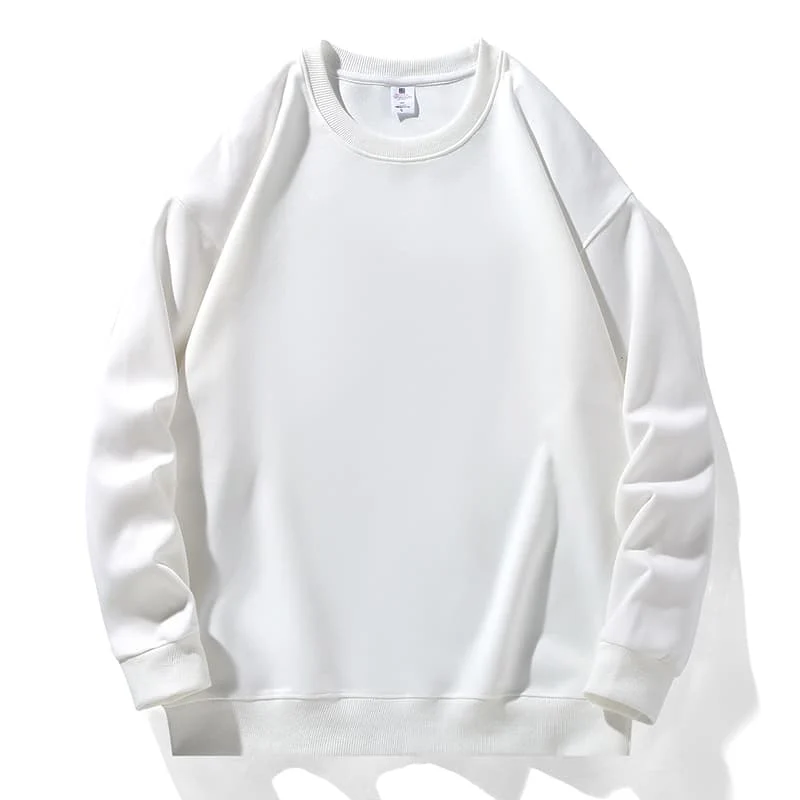 The quality risk control system ensures long-term cooperation. Implementing the AQL 2.5 random inspection standard (125 items per batch) can intercept 97% of dimensional deviations (chest circumference errors > ±1.5cm will be rejected). In 2024, Zara suffered a direct loss of $3.8 million due to the failure to comply with the ISO 2859 standard, resulting in 100,000 pieces of sweatshirt collars coming loose. Requiring manufacturers to provide proof of a Higg Index score greater than 75 can reduce the probability of excessive chemical risk to 0.3% and keep the return rate below 2%.
The optimization of the logistics plan reduces hidden costs. For a 500-piece order using FOB terms and LCL transportation, the ocean freight cost is as low as 1.2 per piece (compared with 8.5 for air freight). DHL data shows that integrating the Southeast Asia - North America route (three flights per week) can stabilize the delivery cycle at 21±2 days and the cargo damage rate at less than 0.1%. For instance, Shein's JIT (Just-In-Time) supply chain system has increased the inventory turnover rate to 12 times per year, and the warehousing cost only accounts for 1.8% of the revenue (the industry average is 5.5%).
Innovative cooperation models can achieve dynamic cost reduction. Research shows that vendors adopting the "design sharing pool" solution (such as Printful) can reduce development costs by 30%. In 2025, Adidas signed an open subscription agreement with the Vietnamese contract manufacturer Vinatex, allowing purchasers to share the pre-order quota for fabrics (each time ≥ 500,000), reducing the unit price of the custom logo hoodies for 5,000 orders to 6.8. The flexible payment clause (45-day payment period) has increased the cash flow turnover rate of the purchaser by 22%, and the average profit margin of both parties has grown by 15 percentage points.
The quality risk control system ensures long-term cooperation. Implementing the AQL 2.5 random inspection standard (125 items per batch) can intercept 97% of dimensional deviations (chest circumference errors > ±1.5cm will be rejected). In 2024, Zara suffered a direct loss of $3.8 million due to the failure to comply with the ISO 2859 standard, resulting in 100,000 pieces of sweatshirt collars coming loose. Requiring manufacturers to provide proof of a Higg Index score greater than 75 can reduce the probability of excessive chemical risk to 0.3% and keep the return rate below 2%.
The optimization of the logistics plan reduces hidden costs. For a 500-piece order using FOB terms and LCL transportation, the ocean freight cost is as low as 1.2 per piece (compared with 8.5 for air freight). DHL data shows that integrating the Southeast Asia - North America route (three flights per week) can stabilize the delivery cycle at 21±2 days and the cargo damage rate at less than 0.1%. For instance, Shein's JIT (Just-In-Time) supply chain system has increased the inventory turnover rate to 12 times per year, and the warehousing cost only accounts for 1.8% of the revenue (the industry average is 5.5%).
Innovative cooperation models can achieve dynamic cost reduction. Research shows that vendors adopting the "design sharing pool" solution (such as Printful) can reduce development costs by 30%. In 2025, Adidas signed an open subscription agreement with the Vietnamese contract manufacturer Vinatex, allowing purchasers to share the pre-order quota for fabrics (each time ≥ 500,000), reducing the unit price of the custom logo hoodies for 5,000 orders to 6.8. The flexible payment clause (45-day payment period) has increased the cash flow turnover rate of the purchaser by 22%, and the average profit margin of both parties has grown by 15 percentage points.
The quality risk control system ensures long-term cooperation. Implementing the AQL 2.5 random inspection standard (125 items per batch) can intercept 97% of dimensional deviations (chest circumference errors > ±1.5cm will be rejected). In 2024, Zara suffered a direct loss of $3.8 million due to the failure to comply with the ISO 2859 standard, resulting in 100,000 pieces of sweatshirt collars coming loose. Requiring manufacturers to provide proof of a Higg Index score greater than 75 can reduce the probability of excessive chemical risk to 0.3% and keep the return rate below 2%.
The optimization of the logistics plan reduces hidden costs. For a 500-piece order using FOB terms and LCL transportation, the ocean freight cost is as low as 1.2 per piece (compared with 8.5 for air freight). DHL data shows that integrating the Southeast Asia - North America route (three flights per week) can stabilize the delivery cycle at 21±2 days and the cargo damage rate at less than 0.1%. For instance, Shein's JIT (Just-In-Time) supply chain system has increased the inventory turnover rate to 12 times per year, and the warehousing cost only accounts for 1.8% of the revenue (the industry average is 5.5%).
Innovative cooperation models can achieve dynamic cost reduction. Research shows that vendors adopting the "design sharing pool" solution (such as Printful) can reduce development costs by 30%. In 2025, Adidas signed an open subscription agreement with the Vietnamese contract manufacturer Vinatex, allowing purchasers to share the pre-order quota for fabrics (each time ≥ 500,000), reducing the unit price of the custom logo hoodies for 5,000 orders to 6.8. The flexible payment clause (45-day payment period) has increased the cash flow turnover rate of the purchaser by 22%, and the average profit margin of both parties has grown by 15 percentage points.